



Patent MarketPlace: Exercise Equipment Patents for Sale
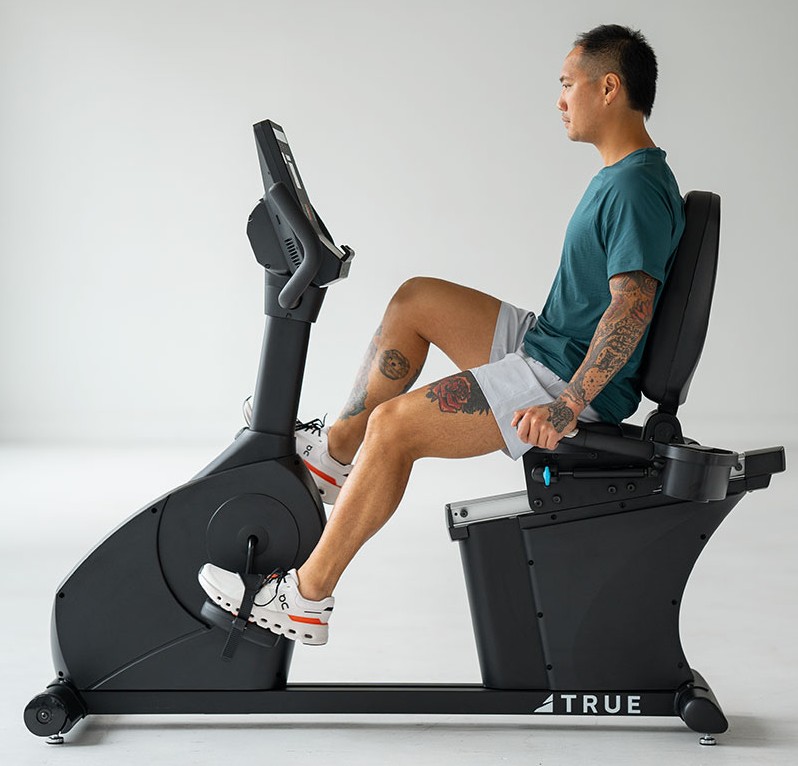 AI-Assisted Wearable/Portable Exercise Trainer (Smith): U.S. Patent Application 20260224943
In today’s world of physical fitness and strength training we often rely upon human supervision such as personal trainers, our own expertise, mobile apps, bar-coded machines, instructional videos, and even contextual written instructions on the machines themselves. Now that we are in this vast age of Artificial Intelligence, we have begun to acclimate to guidance from advanced technology without human intervention or presence. Just imagine paying no more personal trainers’ hourly rates or fees when you can now have your own competent personal trainer on your person or in your pocket!
This patent application creates an AI-assisted portable wearable exercise coach that you can wear on different areas of your body when in use. When you are participating in exercise activity, the device provides personalized exercise instruction, feedback, and program customization through real-time analysis of your biomechanics through vocal correction, guidance, reminders, and tips. It ensures that one always has the proper posture, alignment, tempo, and movement performance while performing any designated exercise movements. Most amazingly, the device can scan and identify any given exercise equipment so the user receives a curated list of all the exercises capable of being performed on that piece of equipment. Users may select from multiple instructional modes such as a pre-exercise tutorial, real-time guidance, and post-exercise feedback to customize their learning session. It delivers audio-visual instructions and recommends substitutions for exercises that cause discomfort or disinterest, and it highlights targeted muscle groups.
U.S. Patent Application 20260224943 for a “System and method for AI-assisted exercise guidance based on exercise equipment identification” will enable an exercise equipment manufacturer to offer a practical and affordable device for both its own customer base and the customers of all of its competitors.
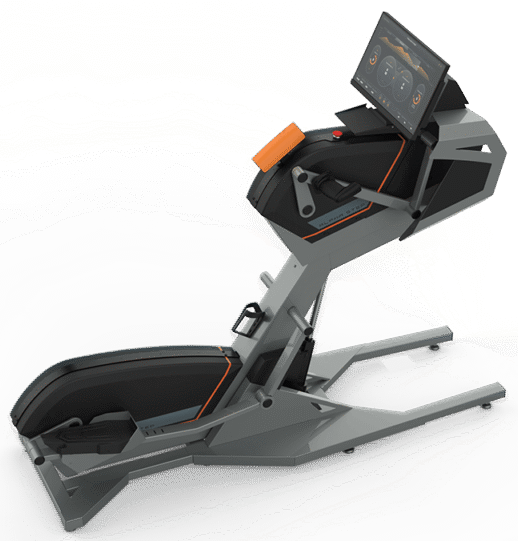 Full-Body Elliptical Exercise Machine (Tigerstep): International Patent Portfolio
In today’s sedentary world, exercise is more important than ever. After sitting for hours at a PC, the human body needs a workout to not just keep healthy, but to eat and sleep better, and perform better on the job and think more clearly. A comprehensive physical workout that reaches as many of the body’s major muscle groups as possible has many benefits, from improving posture to maintaining cardiac health. The problem is, who has time to go from exercise machine to exercise machine to get the comprehensive workout we all need?
This international patent portfolio addresses exactly that need! It includes an elliptical technology designed for simultaneous training of the shoulder girdle, pelvic girdle, and trunk muscles in a single coordinated movement pattern. The device is specifically designed to support a full-body workout, while also aiming to reduce spinal load, improve posture, and support rehabilitation.
First Patent Family
- U.S. Patent No. 10,857,419: Elliptical exercise device for simultaneous training of shoulder girdle, pelvic girdle and trunk muscles in a human
- European Patent 3522999: Elliptical exercise device for simultaneous training of shoulder girdle, pelvic girdle and trunk muscles in a human
- China Patent 109890468: An elliptical training device for simultaneously exercising a person's shoulder girdle, pelvic girdle and trunk muscles
- South Korea Patent 102221787: Elliptical exercise device for simultaneous training of the scapula, pelvis and trunk muscles of the body
- Ukraine Patent No. 117703: Elliptical exercise device for simultaneous training of shoulder girdle, pelvic girdle and trunk muscles in a human
- Ukraine Patent Nos. 112061 and 112062: Elliptical exercise device for simultaneous training of shoulder girdle, pelvic girdle and trunk muscles in a human
Second Patent Family
- U.S. Patent Application 20250065183: A training machine for a simultaneous training of human shoulder girdle, pelvic girdle, and trunk muscles (variants)
- European Patent Application 4448123: A training machine for a simultaneous training of human shoulder girdle, pelvic girdle, and trunk muscles (variants)
- China Patent Application 118695891: Training machine for simultaneously training the shoulder girdle, pelvic girdle and trunk muscles of the human body (variants)
- South Korea Patent Application 20240131366: Training device for simultaneous training of shoulder, pelvic and trunk muscles
- Australia Patent Application 2022450437: A training machine for a simultaneous training of human shoulder girdle, pelvic girdle, and trunk muscles (variants)
- Brazil Patent Application 2024 012144 5: Training machine for a simultaneous training of human shoulder girdle, pelvic girdle, and trunk muscles (variants)
- Eurasia Patent Application 202491584: Training machine for a simultaneous training of human shoulder girdle, pelvic girdle, and trunk muscles (variants)
- India Patent Application 202427054255: Training machine for a simultaneous training of human shoulder girdle, pelvic girdle, and trunk muscles (variants)
- Ukraine Patent Application 202107374: Training machine for a simultaneous training of human shoulder girdle, pelvic girdle, and trunk muscles (variants)
- Ukraine Design Patent Application 202200359
This international portfolio – or selected patents from the portfolio – can be used to create the next-generation of elliptical training equipment. Also available is the European Trademark for “Alpha Step.” Technical documentation, proprietary know-how, industrial design rights, and existing prototype units are available to support the development and commercialization of a next-generation elliptical training product line.
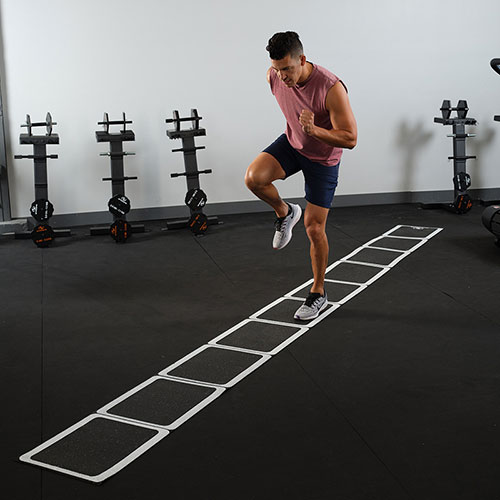 Projected-onto-the-Floor Agility Ladder with Data Collection Capabilities (Keeney): U.S. Patent No. 12,017,112
Agility ladders have long been a staple in the fitness world. They assist individuals to improve footwork, agility, quickness, and endurance; they strengthen joints, ligaments and tendons; and they improve coordination by incorporating fitness routines in which the user places his or her feet quickly and precisely within one of the squares in the ladder. Agility ladder exercise also enhances neuromuscular control and proprioception. Agility ladders are standard training tools for sports teams and for High-Intensity Interval Training (HIIT) in both individual and group settings. However, the traditional agility ladder comes with limitations such as difficulties in storing and transporting the device, tangling when folding the agility ladder after use, limitations on the length of the ladder and size of the squares, lack of ability to track data metrics, and delays in workouts due to coiling of the ladder when it is stepped on.
This patent introduces the next generation of agility ladder and the implementation of a traditional fitness tool into the smart fitness world – a digital image projected onto the floor capable of tracking and utilizing performance data. Rather than use a physical device that has to be taken out and unfolded, and then folded up and put away after each use, this patent creates an agility ladder that is projected onto the floor or any flat surface. Just turn it or when needed and turn it off when done. Schools and sports teams can use a device based on this patent to place an agility ladder at any location in the school when needed. Gyms and health clubs can just click the device ON when needed, and OFF when done, then use that space for something else while also minimizing the spread of germs through repetitive touching of a traditional physical agility ladder. Fitness classes can incorporate it into classes without risk of slowing down HIIT workouts due to coiling. Individuals can take the device with them so they can use it to exercise when traveling on business or on vacation.
U.S. Patent No. 12,017,112 for an “Agility ladder projection systems, devices, and methods” would enable any manufacturer of sporting goods or athletic training equipment to introduce an agility ladder that is super-easy to use, tracks performance data, sets up in seconds, will never coil up, no one can trip over, and cannot break!
 Deep Muscle Massage Tool (Thorn): Two U.S. Patents and Registered U.S. Trademark
Sore muscles need to be massaged. Whether you work out or your muscles are sore from weight lifting, rock climbing, or other strenuous activities, those muscles need to be massaged to relieve the pain. There are massage tools that use rollers that put rolling pressure against sore muscles, and they are appropriate for sore muscles in the torso. But for sore muscles in the arms or legs, a deep muscle massage tool is needed that embraces the arm or leg and can be used standing or sitting while the muscle is idle.
This patent family does exactly that. It uses a strap that is wrapped around the arm or leg to hold the massage tool in place, and it can be quickly adjusted to any length to exactly fit the diameter of the arm or leg. A handle on the device enables the user apply a deep massage in a specific area by moving the handle back and forth to press the tip against the sore muscle and massage it. It can be used anywhere at any time while the user is sitting or standing. The inventor of this device also has a trademark – “The Muscle Masher” – for the patented invention.
U.S. Patent No. 10,342,727 for a “Method of massaging using a massage tool” and U.S. Patent No. 11,065,173 for a “Massage apparatus” would enable any manufacturer of massage equipment to introduce a new, highly effective muscle massage tool to its customer base. The acquirer of the patent family can brand the product created by the patent with its own product name, or the U.S. Registered Trademark “The Muscle Masher” is also available for acquisition.
 Telescoping Massage Roller (Morris): U.S. Patent No. 10,799,419 and Continuation
Athletes of all kinds experience micro-tears in their muscles when they work out. As those micro-tears heal, they form stronger muscles. One factor that improves that healing process is increased blood flow to the afflicted area, and massage is one of the best ways to increase blood flow. Wouldn’t it be helpful if weight lifters and other athletes could receive a massage right after a workout so they can get blood flowing to those micro-tears immediately? And also feel much better? They can.
This patent is a fundamental improvement of the traditional “foam roller” method of applying massaging force to sore and recovering muscles. Using the concept patented here, athletes – as well as the elderly and those who are injured or disabled – can more easily and more effectively “roll out” their muscles. The adjustable height and angle of the device allows the athlete to reach and massage muscles that floor-based foam rollers simply cannot reach. This patent takes well documented and proven methodology that can be seen used in every gym in America and makes it easier, more accessible, and more effective for experienced athletes and novices alike. The simple and intuitive structure means that little to no training is required to safely and effectively use this device. The massage roller is mounted on the squat rack or elsewhere – maybe a door – at home or in a gym or health club. The athlete or patient backs up to the massage roller and moves up and down and side-to-side as the roller massages his or her muscles. The unit is telescoping so it can be mounted to supports of varying widths, and it includes handles for the user so he or she can securely mount it and make adjustments in height and angle. In another version of the patent, this telescoping massage bar is a standalone device on its own frame.
U.S. Patent No. 10,799,419 and U.S. Patent Application 20200397650 for a “Telescoping massage roller and assembly of a physical fitness cage with a telescoping massage roller” would enable any weight-lifting equipment supplier to create a new market segment in the exercise equipment industry. The manufacturer can also build this device to fit onto their competitors squat racks, giving them a market entry point into established gyms that are not currently using their rigs and racks.
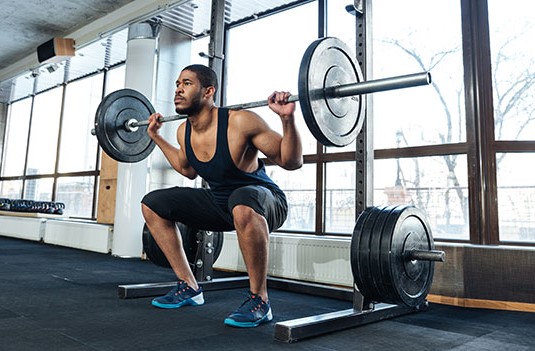
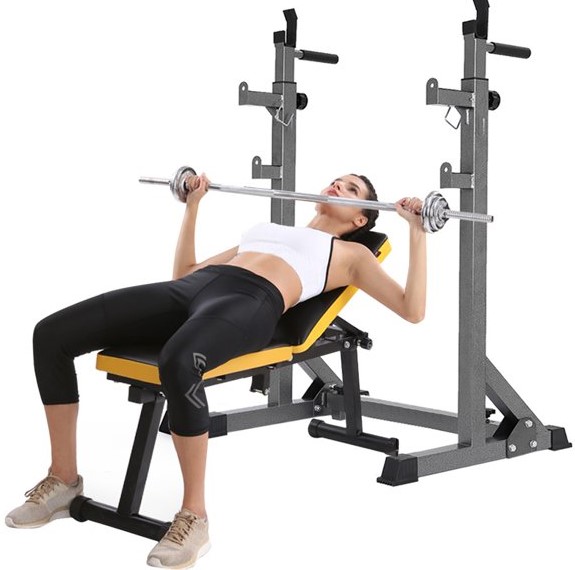 Width-Adjustable Weight Rack (Hensler): U.S. Patent No. 10,974,091
The standard weight rack is 48 inches wide and holds barbells loaded with weights, leaving approximately 44 inches for hand placement by the weight lifter. The primary exercise movement effected by hand placement are squats. Many weight lifters – whether it's their physical size, lack of mobility, or personal preference – will place their hands as wide as possible on the barbell to perform the squat exercise. This often leads to their hands coming directly into contact with j-cups and/or the weight rack. This puts the weight lifter who requires a wide reach at a disadvantage – in fact, a dangerous disadvantage! Strangely enough, most weight racks have NO width adjustment. All users must work within the four-foot span of the weight rack. Many hand injuries have been sustained due to this limitation.
Until now. This patent creates j-cups that can be used to quickly and easily reduce the width of any weight rack from 48 inches down to 36 inches. These patented j-cups provide a six-inch offset on each side, making it much safer for weight lifters to place their hands wide on a barbell. These patented j-cups work on any weight rack, so a weight lifter can easily modify his or her existing equipment. A health club can use these patented j-cups to upgrade its weight racks to be adaptable, more convenient, and safer.
U.S. Patent No. 10,974,091 for a “Weight rack adjustment mechanism” will enable any athletic weight equipment or accessories manufacturer to offer a greater level of convenience and safety for its customers.
Patent Brokerage Prospectus: Contact [email protected] to receive an analysis of each portfolio that includes:
- Executive Summary
- Patent Overview and History
- Technology and Investment Summary
- Market Research
- Company Analysis
- Illustrative Evidence of Use (if applicable)
We offer patents in these technologies:
- Agricultural
- Apparel and Shoes
- Artificial Intelligence
- Automotive/Vehicular
- Aviation
- Banking/Financial Services
- Beverages/Foods/Nutritional Products
- Boat and Marine
- Cannabis and Medical Marijuana
- Construction/Building Trades
- Consumer Electronics
- Consumer Products
- Digital Currency/Cryptocurrency
- Drones/UAVs
- E-Cigarette & Vaping Technology
- E-Commerce
- Education & Training
- Energy/Power Generation
- Exercise Equipment
- Health and Beauty Products (HBP)
- Human Resources
- IoT Patents/Internet of Things
- Manufacturing
- Medical Electronics and Devices
- Mining/Drilling
- Mobile/Wireless
- Network/Location-Based Services
- Optics/Displays/Video/LED
- OTT Patents/Over-the-Top
- Packaging
- PCs and Notebooks
- Pharmaceuticals
- Robotics/Automation
- Semiconductor
- Smart Home/Smart Office
- Social Media
- Software, Apps, and Architecture
- Sports/Sporting Goods
- Telecommunications/IP Telephony
- Warehousing/Material Handling
- Other
- Go to Patent Index
- Return to Patent MarketPlace
